An online shop that works from product to fulfilled order.
Online shops: we make the journey from product to paid and fulfilled order work for your customers and your team.
We work through the journey from product to order: the storefront, checkout, payments, order emails and fulfilment. We implement the improvements, test real buying scenarios and support your team. Keep WooCommerce if your team likes it, or move to GAX, built, run and hosted by Revitt. Your domain and data stay yours. GAX is proprietary software.
GAX: we build and run your shop
£999 + VAT to build, then £99 a month + VAT.
The monthly fee covers hosting, updates, speed and fixes. It works whether you keep WooCommerce or move to our own faster back end.
| Measure | Before | After |
|---|---|---|
| Active plugins | 45 | 5 |
| Google mobile speed score, shop page | 88 | 99 |
| Time for the main content to appear | 3.81s | 2.15s |
| Time the page could not respond to taps | 1,340ms | 30ms |
Source: The Embroidery Shed, 2026. Lab measurements taken on the shop, not field data.
What else changed for the businessYour choice of back end
Keep WooCommerce, or move to our own faster back end
A shop built around you
Your brand and the way your customers buy
Checkout tested before launch
VAT, shipping, payments and emails checked as real orders
No sales fees
Your domain and data stay yours. Normal card fees apply.
Stop losing orders you have already paid to attract.
Every visitor who leaves a slow page or a broken checkout cost you money to bring in. We fix the parts customers touch, without making your team’s work any harder.
Speed is money
Shaving half a second off Smirk’s cart and checkout brought in about £2k a day more revenue, about the same as they spent on ads each day.
- Customers give up while pages load
- Pages open quickly, especially on phones, so more visitors reach the basket.
- Checkout fails on awkward orders
- Every kind of order is tested before launch, so you stop losing sales at the last step.
- You pay for marketing but cannot see what sold
- You see which campaigns bring paying customers, and put the budget where it earns.
The Embroidery Shed
A UK workwear business with a large garment catalogue, made-to-order embroidery, VAT, quantity pricing, customer artwork and real fulfilment rules.
Visit the current business site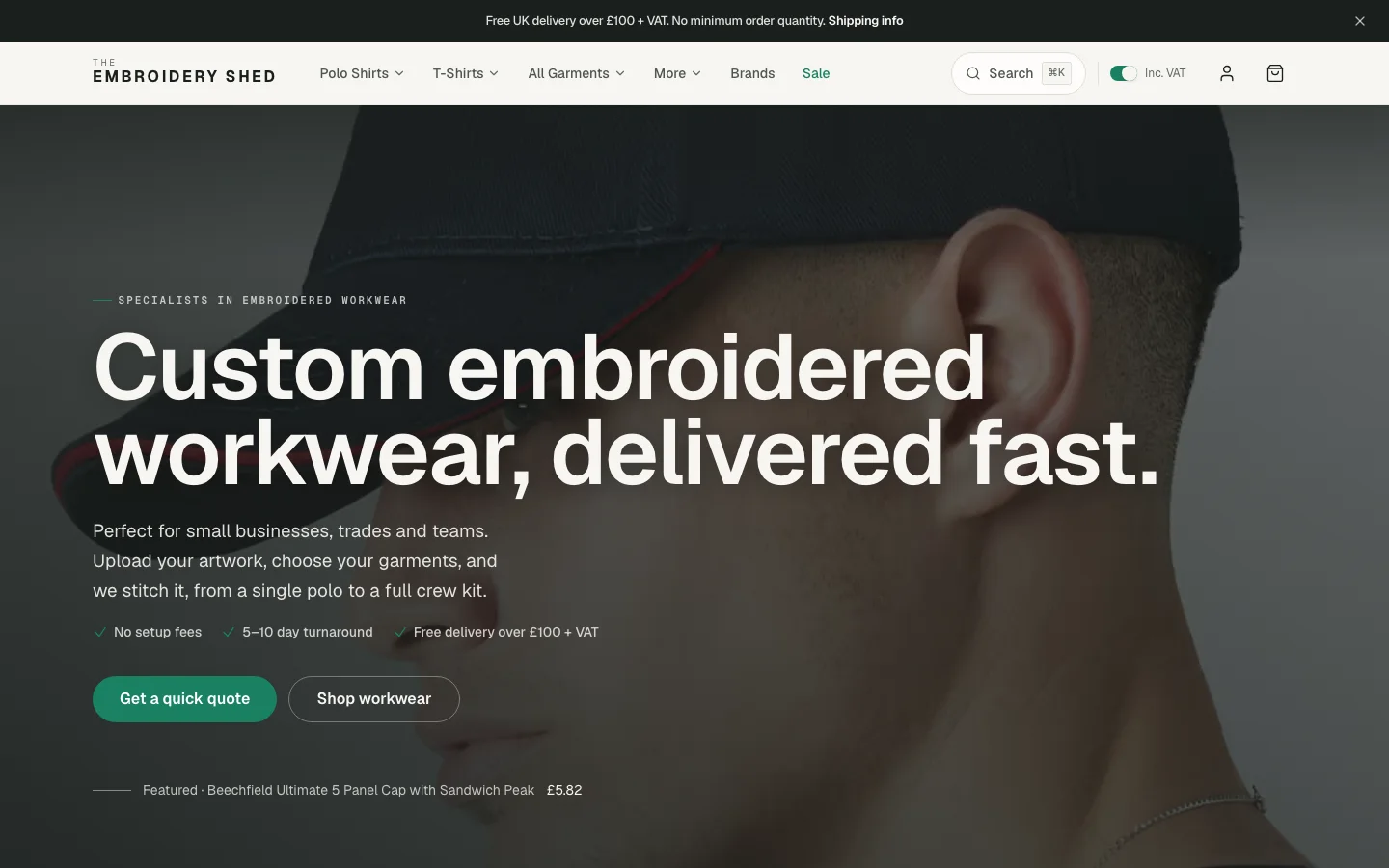
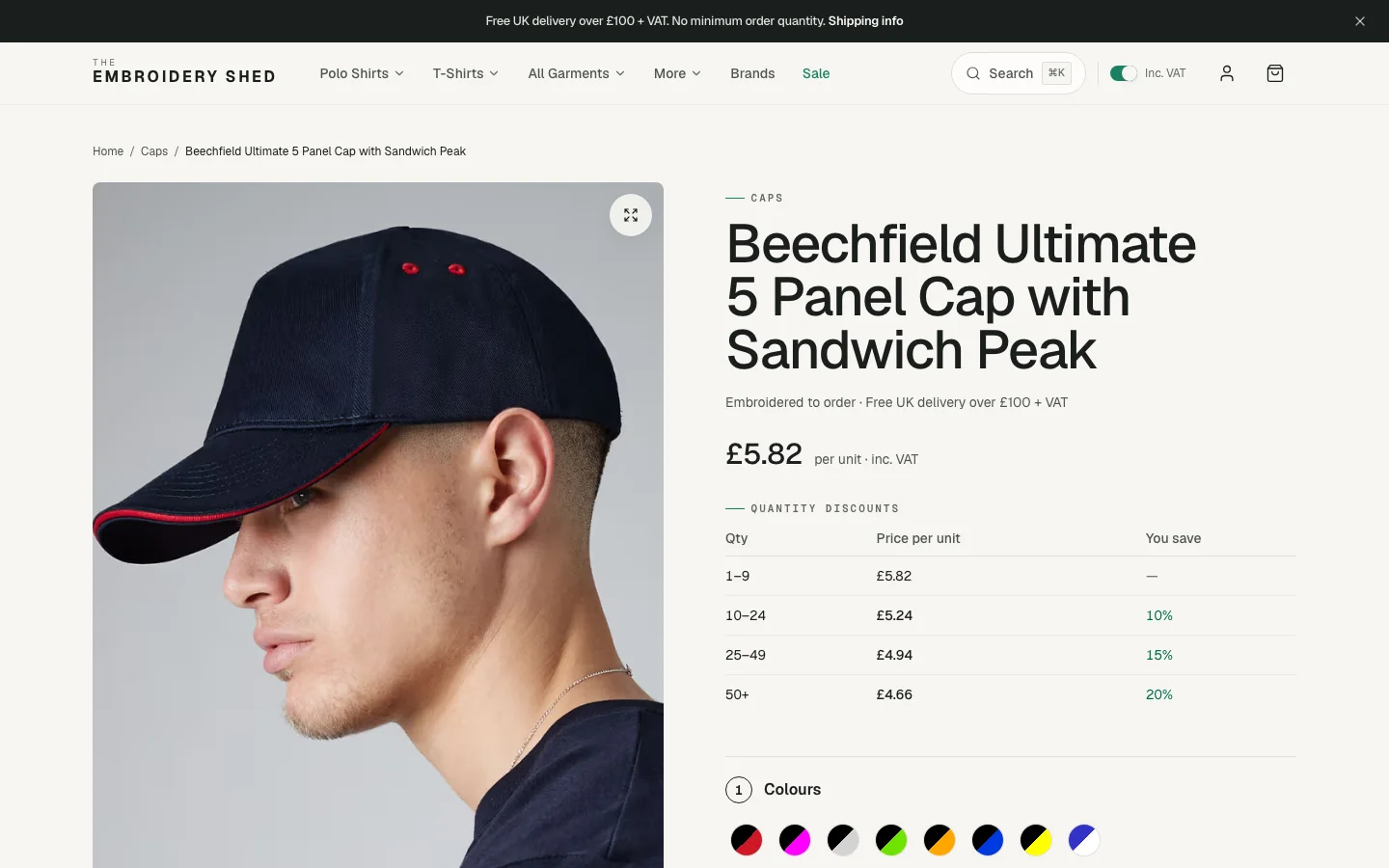

Built around the awkward bits of the business.
- 21
- types of order tested automatically, covering VAT, shipping, coupons, bundles and double checkouts
- 7
- order emails checked on every test run
- < 2.5 hrs
- to restore the whole shop from backup, proved in a full recovery test
And category pages load almost instantly
- 306msto~2ms
- to load a product category, once caching worked
Performance figures are lab measurements taken on this shop, not field data, and not a guarantee of future traffic or revenue.
“I had spent far too much time battling plugins, visual editors, and one-off fixes just to keep the store running. We still manage products and orders in the same familiar WooCommerce back office, but the shop itself is faster, clearer, and properly engineered. I can sleep easier knowing the important bits have been taken care of.”
The half customers never see.
The other half of the job is clearing out what was quietly costing money and making the shop easier to run.
A faster shop, with no retraining
45 plugins cut to 5, including two page builders, two SEO plugins and two security suites. The Embroidery Shed chose to keep its WooCommerce admin, so staff use the same screens as before. The plugins that remain are locked to checked versions, so a tampered update cannot install itself.
Search that understands what customers mean
A search for “something warm for the lads outside” finds fleeces. Search runs separately from the admin, so an admin update cannot break it, and it falls back to plain keyword search if the smart part is unavailable.
Analytics you own
Traffic, channels, revenue and customer lifetime value from your real orders, without cookies and without relying on Google Analytics.
Hosting that is hard to attack
Nothing on the server accepts connections from the open internet. If a release misbehaves, the shop rolls back to the last working version automatically.
AI where it helps
We use it for practical jobs: search like the example above, help tidying product data, and flagging orders that need a person to look at them.
Trading figures as they happen
Carts, checkouts and orders in near real time, so you can see how a sale or a campaign is going on the day.
Trig Prints, our own shop.
We built and run Trig Prints, which turns a recorded ride or run into a personalised printed poster. Customers upload a route file, design the print, pay and get it delivered in the UK. The design they choose carries through to the order, the print and the delivery.
Running it means we answer for the same things you do: the checkout, the order emails, the fulfilment and the sales figures.

Behind the shop.
A shop is only as good as the systems behind it. We also build the product data, back office, ordering and invoicing that keep orders moving once they are placed.
- Product information in one place
- Descriptions, options, prices and stock kept in one record, so the shop and your team work from the same product data.
- Back-office tools
- The jobs your staff do by hand between an order arriving and the goods leaving, built into the systems they already use.
- Digital ordering for trade customers
- Orders arrive electronically, are checked and appear on one screen for the operations team.
- EDI and invoicing
- Invoices go out automatically in the format each customer requires, including TRADACOMS for UK retailers and merchants.
Where we have done it
- Everything Boxed
Digital ordering and invoicing live by their biggest customer’s deadline. They kept the account.
- Miranda
Ordering and invoicing automated, every order invoiced within 24 hours, and the contract renewed.
- TRADACOMS EDI invoicing
Miranda now invoices a national builders’ merchant automatically, in the strict format it insists on.
Moving on from an older platform.
Plenty of good shops still run on older software. We move them carefully, keeping what works.
- Magento 1 or OpenMage
- Old or unsupported versions of PHP
- Classic ASP
- A custom build that only one person understands
We start by finding out what the current shop does well: the pricing rules, customer accounts, order history and links that bring in search traffic. Those come across. Products, customers and orders move with them, and old addresses point to the new pages. The new shop is tested with real orders before it replaces the old one, and the switch happens at a quiet time with a way back.
If the shop mostly needs a fault fixed, we repair it in place. If the platform itself is the problem, we plan the move and quote it as its own job.
We only move what needs moving.
Anything that works stays. What’s costing you goes, and the launch plan is in writing before the live shop changes.
One point to say yes or no
A fixed-scope proposal before any work begins.
- 1
Review the live shop
We look at speed, plugins, your catalogue, checkout rules, analytics and the jobs your team does in the admin.
- 2
Choose the smallest sensible change
You get a fixed-scope proposal that says what stays, what changes, what success means, which hosting fits, and how we protect day-to-day trading.
- 3
Prepare and test real orders
We work from your real data and test VAT, shipping, payments, emails, accounts, search and recovery, including the awkward cases.
- 4
Launch with a way back
The move, monitoring, rollback and handover are planned before release. Ongoing care and platform ownership terms are agreed before work starts. Your domain and data stay yours.
What you leave with
- A fast shop, designed for phones first
- Checkout and order emails tested as real orders
- Reporting on which campaigns bring sales, within cookie consent
- Hosting and access agreed for your chosen platform
- A launch plan with a way back
- Full handover and documentation
For shops where a slow or fragile website now costs real money.
The shop customers see needs to catch up with the business behind it.
Regular orders
The shop already has trading history and customer journeys worth protecting.
Awkward products or orders
Customisation, trade pricing, VAT or shipping rules that an off-the-shelf theme gets wrong.
A commercial reason to improve
The shop being slow or falling over now shows up in the sales figures.
Direct access and ownership
You want experienced people in the room and clear ownership of your domain and data, with access and responsibilities agreed.
If a smaller fix will do, we’ll say so.
A new shop still testing demand, or one that only needs a fresh look, doesn’t need a rebuild. We’d rather tell you that than sell you one.
Questions owners ask before they let anyone near the shop.
Still unsure? Send your shop’s address and the main thing that is bothering you. You’ll get a proper reply, and we won’t chase you for a call.
Send your shop’s addressCan you build a new shop or help us move from Shopify?
Yes. We build WooCommerce shops as well as improving existing ones. It is an option when you want more control over hosting, customisation and payment providers, or want to compare the total cost with Shopify. We account for hosting, payment processing, maintenance and extensions before recommending a move. For grey-market or specialist retail, we check that the catalogue and chosen providers fit before building.
Do I have to leave WooCommerce?
No. If your team likes WooCommerce, it can keep managing products, orders, customers, VAT, shipping and fulfilment there, and we rebuild the shop your customers see. If you would rather leave, we can assess a move to GAX, our proprietary platform built, run and hosted by Revitt. Your domain and data stay yours; the platform source code remains ours. Order, VAT, shipping and fulfilment handling is tested before the switch.
What size shops do you work with?
Established UK shops that take orders every day and have a real reason to want the site faster or more reliable.
Can you improve my existing theme instead of rebuilding everything?
Sometimes. The first review sorts quick wins from deeper problems. If tidying the theme and plugins will do the job, that is what we recommend.
Do I have to move to Shopify or pay a fee on every sale?
No. You can stay on WooCommerce or move to our own back end, and we do not take a percentage of your sales or charge per order. You still pay your card processor, payment gateway, hosting and any paid extensions, and we list those costs before work starts.
Where will the new shop be hosted?
GAX is hosted and run by Revitt. If you keep WooCommerce, hosting is agreed for your existing setup and trading needs. Your domain and data stay yours. We agree access, monitoring, backups, releases and rollback before work starts; GAX is proprietary software and its platform source code remains with Revitt.
How does pricing work?
It's our GAX service (gax.sh). We build and run your shop for £999 + VAT to build, then £99 a month + VAT. The monthly fee covers hosting, updates, speed and fixes, whether you keep WooCommerce or move to our own faster back end. It starts with a free call, and the build is quoted as a fixed scope, with the timeline and assumptions in writing. If a change will not earn back what it costs, you hear that before you spend anything.
How will we know whether the new shop is working?
We agree the measures before work starts. That normally includes page and checkout speed, orders completing without errors, where visitors come from, and which pages and campaigns lead to orders.
First, find out where the shop is losing orders.
Bring the shop’s address and the problem that keeps coming back. You’ll speak to Max Revitt, our founder, who leads the work.
Book a free call with MaxOr send Max your shop’s address